


AAll products on this website are discounted products, and market prices have been fluctuating. Please refer to customer service quotes for details. Pictures are not actual photos. Before placing an order, please confirm the model, product, price, and other detailed information with customer service. Both second-hand and brand new products are available for sale on this website. Please contact customer service for further communication.
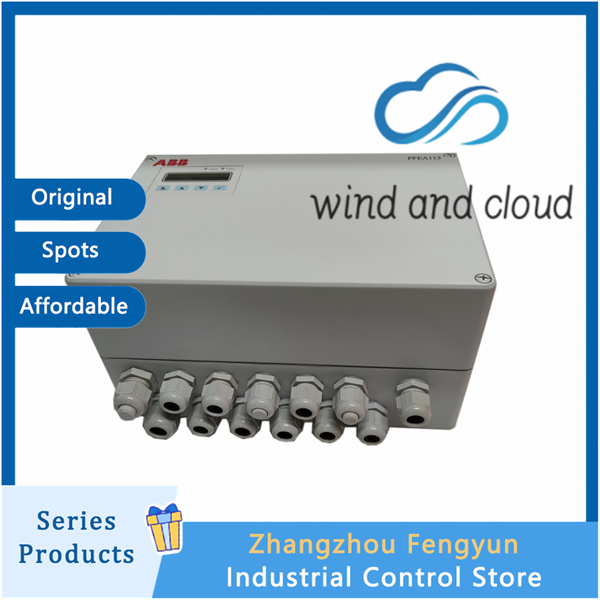
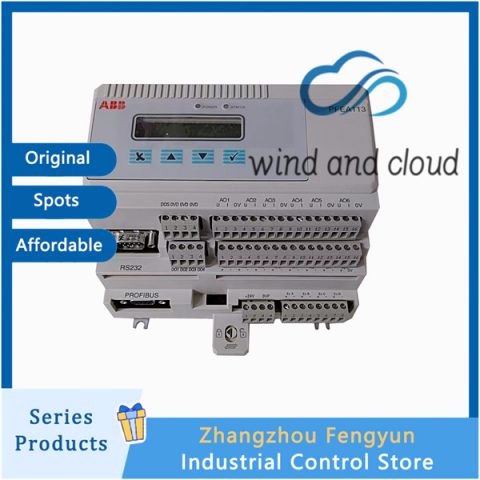
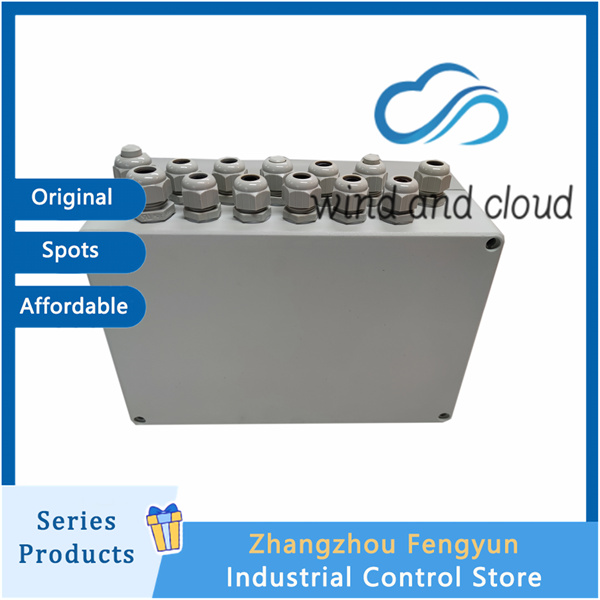
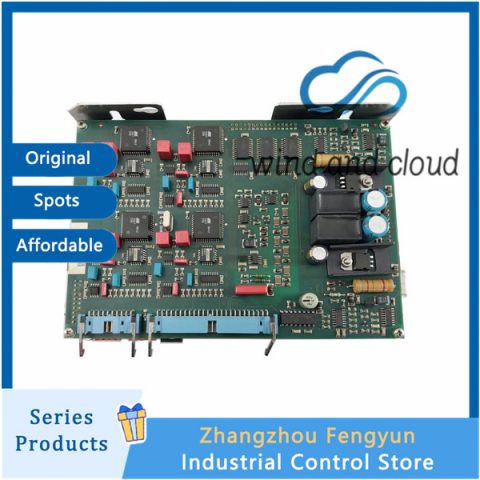
ABB PFEA113-65 3BSE028144R0065|Tension Electronic Controller|
The operating principle of a force transducer fundamentally determines its performance, stiffness, vibration resistance, and overload tolerance — all of which directly affect the design, operation, and long-term reliability of web processing and tension measurement systems.
ABB’s Pressductor® technology is based on an electromagnetic measurement principle, which differs significantly from conventional strain gauge load cell designs. Instead of relying on mechanical deformation such as bending, compression, or stretching, the Pressductor® transducer generates a signal from changes in a magnetic field caused by applied mechanical force.
Electromagnetic Measurement Principle
At the heart of the Pressductor® transducer lies a metallurgical phenomenon:
Mechanical stress alters the magnetic permeability of certain steels — that is, their ability to conduct a magnetic field.
When mechanical force is applied to the steel core of the transducer, this change in magnetic permeability modifies the electromagnetic field distribution, producing a measurable electrical response.
Unlike conventional load cell technologies, the Pressductor® principle requires no physical movement to generate the signal. This makes it exceptionally stiff, robust, and resistant to vibration and overload, ensuring high accuracy and long-term stability even in harsh industrial environments.
Transducer Design
A Pressductor® sensor consists of a steel core and two copper windings mounted at right angles to each other.
Excitation winding: Continuously energized with an alternating current (AC), this winding creates a stable electromagnetic field within the steel core.
Sensing winding: Positioned perpendicular to the excitation winding, it detects magnetic field changes caused by applied force.
Under no-load conditions, there is no magnetic coupling between the two windings, and no voltage is induced in the sensing winding.
When mechanical force is applied to the transducer, the internal magnetic field pattern changes — part of the field couples into the sensing winding, inducing an AC voltage proportional to the applied force.This induced voltage is a strong and stable signal, which is then processed by ABB’s tension electronics to produce a precise system output corresponding to the web tension acting on the measurement roll.
Key Advantages of the Pressductor® Principle
No mechanical strain or displacement required – eliminates fatigue and mechanical wear.
High stiffness and vibration immunity – ensures stable readings under dynamic load conditions.
Exceptional overload capacity – robust steel-core design withstands extreme forces.
Stable, strong signal output – ideal for demanding industrial tension and force measurement applications.
Low maintenance – long operational life with minimal recalibration needs.
ABB PFEA113-65 3BSE028144R0065|Tension Electronic Controller|
Hot selling models

By structuring the information in this manner, the article provides a clear and organized understanding of input channels, transducer supply, and communication implementations in distributed control systems.
Zhangzhou Fengyun’s main products include ABB, GE, Bently Nevada Bentley, ICS TRIPLEX, Honeywell, Schneider, EPRO, yokogawa Yokogawa, Woodward, EMERSON, Emerson, and Invensys TRICONEX, which have abundant inventory, fast delivery, and reliable quality.
There are no reviews yet.